Roof Systems
White EPDM Roofing in Green Bay, WI
White EPDM for Refrigeration Load on Green Bay Cold Storage Roofs
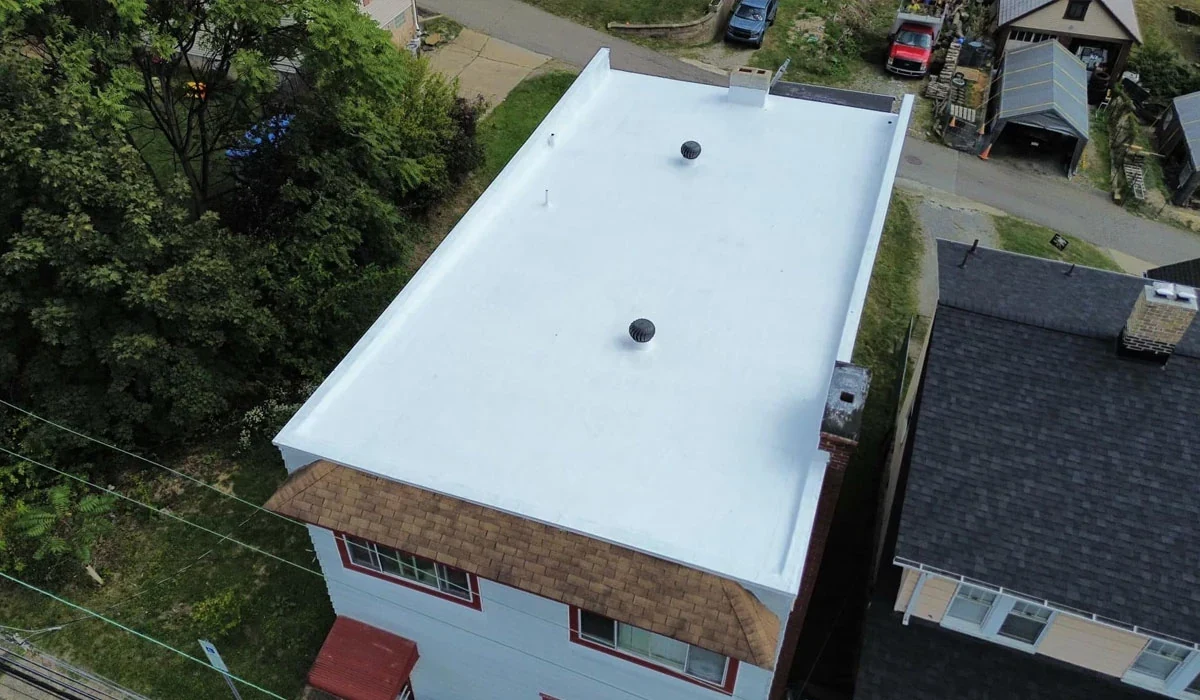
White-faced EPDM pairs the same rubber sheet as black EPDM with a reflective laminate surface, and in a cold climate market like Green Bay the case for paying that premium is narrower than in the South. It still makes sense on a specific slice of the building stock here.
Why Color Matters Mainly on Mechanically Cooled Buildings
In a market with real winters, a white roof does not save much on heating cost, and a black membrane's solar gain can even offset heating load slightly during the coldest months. The math changes on refrigerated buildings, though. Food processing and cold storage facilities run mechanical cooling year-round, and a reflective roof surface reduces the solar heat load the refrigeration system has to fight, even on cold-climate days.
We spec white EPDM most often on cold storage additions and refrigerated warehouse roofs tied to the food processing operations near the port and the rail corridors, where the roof's job is keeping heat out of a mechanically cooled space rather than keeping it in.
On a conditioned office or retail building without significant refrigeration load, we generally do not push the owner toward the white upcharge. The reflectivity premium has to be earned by an actual cooling load, not assumed.
The Physics Under the Reflective Laminate
The reflective facing is bonded to the same EPDM rubber sheet used in black membrane, so the underlying flexibility and freeze-thaw performance are identical between the two colors. What changes is surface temperature swing: a white membrane runs cooler under summer sun and stays closer to ambient temperature through the day, reducing the thermal expansion and contraction the sheet cycles through.
Seam technique and seam materials are unchanged from black EPDM, which means the same seam vulnerability applies. White facing does not improve seam performance in any way; it only changes how the field membrane responds to solar heat.
Vapor Drive and Reflectivity on Refrigerated Assemblies
Reducing solar heat gain on a cold storage roof does more than trim energy cost. It also lowers the temperature differential that drives vapor migration through the assembly, which reduces the risk of condensation forming inside the insulation during warm, humid stretches of the year. That benefit sits on top of whatever vapor retarder is specified below the insulation, not in place of it.
We still design the vapor retarder as if the membrane were black, because leaning on reflectivity to manage vapor drive is not a substitute for a properly lapped and sealed retarder at the insulation layer.
The Snowmelt Tradeoff Nobody Asks About
A white membrane sheds snow more slowly than black EPDM on a sunny winter day, since it reflects rather than absorbs solar heat. On most low-slope commercial roofs that is a minor factor, but on a roof with marginal drainage or a known ponding area, slower snowmelt can mean standing water sits longer into spring freeze-thaw cycles, which is exactly the condition that stresses an EPDM seam.
We weigh that tradeoff against the refrigeration savings before finalizing a white spec on any roof with a documented drainage issue, since fixing drainage first is usually the better investment either way.
- Confirm refrigeration or cooling load before recommending white over black EPDM
- Design the vapor retarder independent of membrane color
- Check drainage and ponding history before finalizing membrane choice
- Verify seam materials and technique match standard EPDM specification
- Document existing insulation R-value before adding a reflective cap
Sizing the Membrane to the Actual Cold Storage Footprint
Not every roof on a food processing or distribution campus needs the same membrane. A refrigerated warehouse section running at freezer or cooler setpoints has a real reflectivity and vapor-drive case for white EPDM, while an attached office or loading dock section with standard HVAC often does not justify the upcharge on its own.
We walk the mechanical drawings section by section on mixed-use industrial buildings, rather than specifying one membrane color across the entire roof by default. Splitting a roof between black and white EPDM at a parapet transition is a normal outcome on a campus with both refrigerated and conditioned space under one structure.
That approach also keeps the owner from paying the white premium on square footage where it will never earn back the cost difference through reduced cooling load.
Questions on White EPDM in a Cold Climate
Does white EPDM make sense on a normal warehouse here?
Usually not. Without significant mechanical cooling load, the reflectivity benefit is small in this climate, and black EPDM's lower relative cost typically wins on a plain warehouse.
Will a white roof increase our heating bill?
The effect is measurable but generally minor compared to insulation R-value and air sealing, which matter far more to heating cost than membrane color does.
Is white EPDM more expensive than black?
Yes, the reflective laminate adds cost per square foot over standard black EPDM, which is why we only recommend it where reflectivity has a real payoff.
Does the white surface stay reflective over time?
Reflectivity does decline with dirt accumulation and age, which is a maintenance consideration; periodic washing can restore some performance on a well-maintained roof.
Can black EPDM be converted to white later with a coating?
Yes, an acrylic or silicone coating can add reflectivity to an existing black EPDM roof without full replacement, provided the membrane and seams are sound first.