
Commercial Roofing Services
Storm Damage Roof Repair in Green Bay, WI
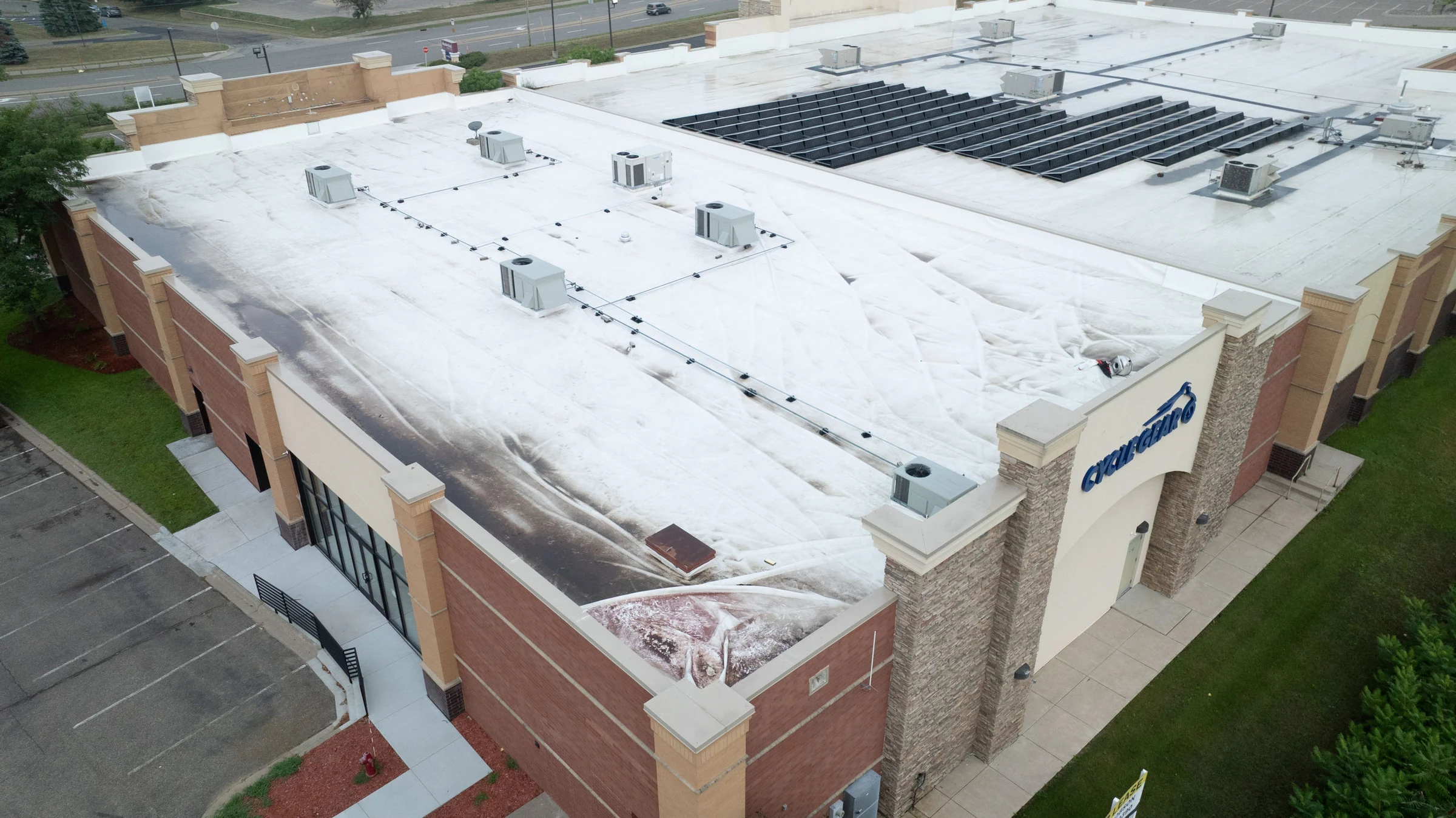
Repairing What Wind, Hail, and Snow Load Actually Did to the Roof
Storm damage repair starts with an honest assessment of what a specific event did, not a generic damage checklist. Wind off the bay, a heavy snow load event, and a summer hailstorm each leave a different signature on a commercial roof, and the repair scope follows what we actually find, not what the storm type usually causes elsewhere.
Bay-Effect Snow Load Damage
Heavy, wet snow off the bay can pile up unevenly across a roof, drifting deeper against parapets and rooftop units than in open field areas. That uneven load stresses the deck and structure at specific points rather than uniformly, and we check those drift zones first after any major snow event, since that's where sagging or membrane stress shows up earliest.
Older buildings, particularly ones built before current snow load code updates, are the ones we watch closest. A structural engineer's sign-off sometimes has to happen before we touch the roof if a deflection concern comes up during our walk.
Spring Ice-Out Wind Events
The wind that comes off the bay as ice breaks up in spring can be sharp and sustained, strong enough to lift membrane at a marginal seam or peel back edge metal that survived the winter's snow load fine but wasn't built for a direct lateral gust. We see a distinct wave of wind-related repair calls in late March and April separate from winter's ice-dam pattern.
Loose gravel ballast or aggregate surfacing on older built-up roofs is especially vulnerable to this wind pattern, since displaced ballast can both expose membrane and become wind-blown debris that damages equipment or adjacent roof sections.
Summer Thunderstorm and Hail Damage
The Midwest storm track brings fast-moving summer thunderstorm cells through the area, sometimes with hail large enough to bruise or puncture membrane, dent rooftop equipment, and crack skylights or curbs. Hail damage isn't always visible from the ground, so we walk the full roof after any reported hail event in the area, even on buildings that didn't call us first.
Hail bruising on some membrane types doesn't show as an obvious puncture right away but weakens the material at the impact point, which then fails months later under normal weathering. We document impact patterns at the time of the storm so there's a record even if the failure shows up later.
What a Storm Damage Assessment Covers
- Full roof walk documenting damage type, location, and extent with photos
- Structural spot check at snow drift zones after heavy load events
- Membrane, flashing, and edge metal inspection for wind-related lift or tears
- Hail impact mapping across the full roof, not simply reported problem areas
- Written damage report suitable for insurance documentation
- Itemized repair scope priced separately from the assessment itself
Pricing Storm Repair by the Square Foot
We price storm repair scope the same way we price any other roofing work, by square footage and material, not as a percentage markup tied to an insurance settlement. That keeps the number honest whether a repair is being paid out of pocket or through a claim, and it gives you a figure you can compare against other estimates line by line.
For damage that affects a large enough share of the roof, we'll run the lifecycle cost comparison between a targeted repair and a fuller section replacement, since storm damage sometimes accelerates a roof toward the replacement decision faster than normal wear would have.
Storm Damage Questions We Hear
How soon after a storm should we get the roof checked?
As soon as it's safe to get someone up there. Some damage, like hail bruising, isn't obvious right away, and documenting it close to the event date matters if you end up filing a claim later once a slow leak develops.
Can you tell the difference between storm damage and normal wear?
Usually, yes. Storm damage tends to show a pattern tied to the event, like impact marks concentrated on one roof orientation from wind-driven hail, versus wear that's more evenly distributed across the whole roof surface from age and UV exposure.
What if the damage isn't found until months after the storm?
We'll still assess and document what we find, and note in the report whether the damage pattern is consistent with a specific storm date if you can identify one. Delayed discovery is common with hail bruising and slow-developing membrane fatigue.
Do you work directly with insurance adjusters?
We provide documentation and can walk a roof alongside an adjuster if requested, but we don't promise a claim outcome or negotiate settlement amounts. Our job is an accurate, honest damage report; what a carrier decides to pay is between you and them.
Should we repair storm damage or wait until the next scheduled inspection?
Depends on the damage. An open breach or compromised flashing needs immediate attention regardless of the calendar. Cosmetic or minor damage that isn't actively leaking can sometimes wait, but we'll tell you which category it falls into rather than push urgency that isn't there.