Commercial Roofing Services
Metal R-Panel Roofing in Green Bay, WI
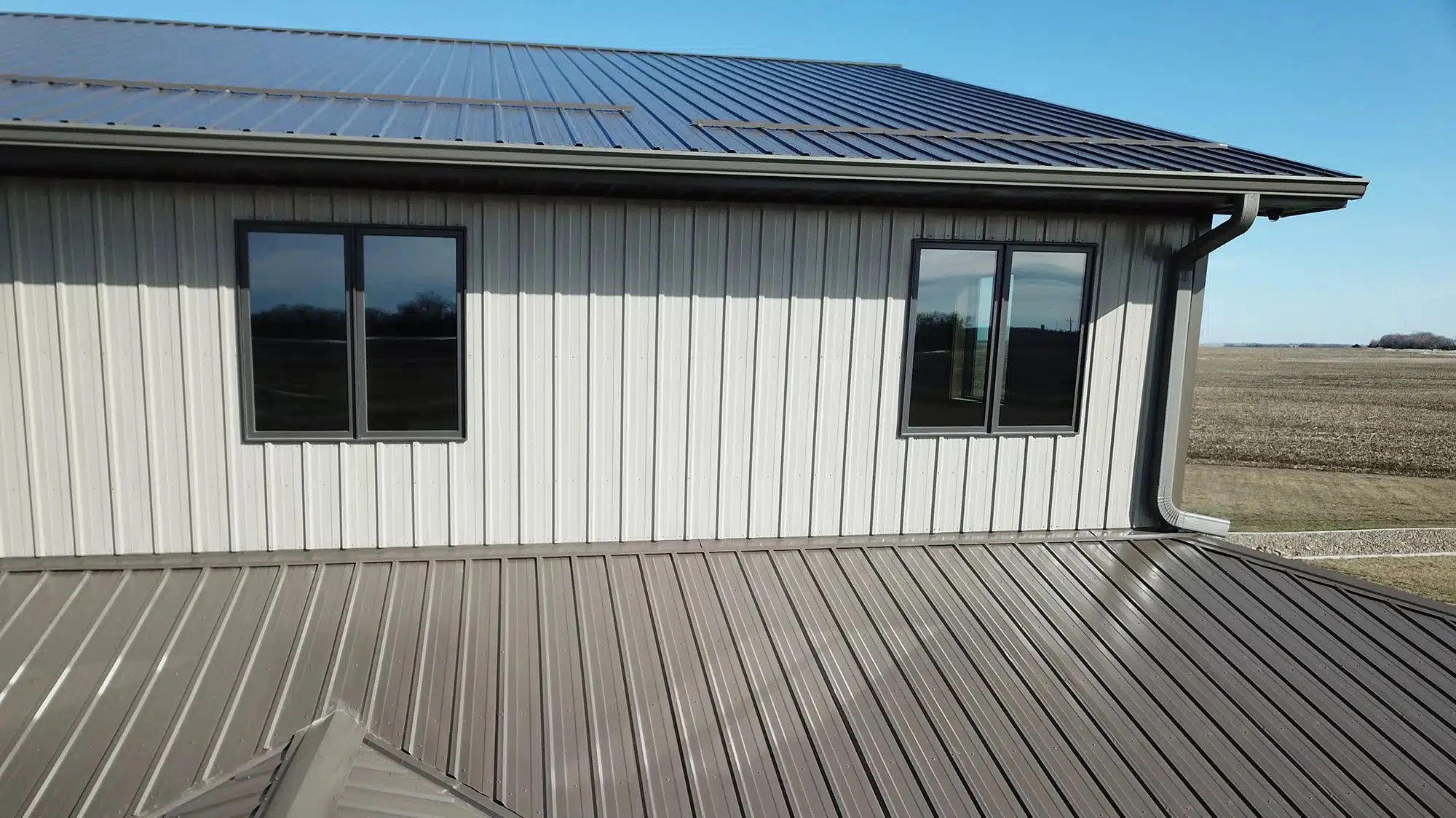
Exposed-Fastener Metal Roofing for Green Bay's Warehouses and Ag Buildings
R-panel metal roofing, with its trapezoidal rib profile and exposed screw fasteners, is the standard roof on pole-barn style warehouses, ag service buildings, and light-industrial shells across the rural townships around Green Bay. We install new R-panel systems and service the exposed-fastener maintenance that keeps an existing one weathertight.
Why R-Panel Dominates This Building Type
Out toward Denmark, Pulaski, Wrightstown, and the smaller ag-service communities, R-panel is the roof on most pole-barn and metal-frame commercial buildings, largely because it costs meaningfully less to install than standing seam and goes up faster on a straightforward gable roof with a simple ridge. For a warehouse, equipment shed, or ag services building where budget matters more than architectural profile, R-panel is usually the right call.
Exposed Fasteners: The Maintenance Trade-Off
Every fastener penetrating an R-panel roof carries a rubber washer that seals the screw hole, and that washer is a wear item with a service life shorter than the metal panel itself. Once washers start cracking or compressing from age and UV exposure, water finds a path through the fastener hole long before the panel itself shows any sign of failure. That is the main maintenance difference between R-panel and a concealed-fastener system like standing seam.
Re-torquing and washer replacement on an aging R-panel roof is one of the most cost-effective maintenance items in commercial roofing, since a few hours of fastener work can eliminate leaks that would otherwise require chasing individual screw locations across the whole roof one at a time as they fail.
Screw Backout After Repeated Freeze-Thaw Cycles
Thermal expansion and contraction works a fastener loose over years of cycling, and Wisconsin's freeze-thaw swings put more cycles on a roof each year than a milder climate would. Backed-out screws lose sealing pressure on the washer even before the washer itself has degraded, which is why we check fastener torque as a standard inspection item rather than only replacing washers that have visibly failed.
What Our R-Panel Service Covers
- New R-panel installation on warehouse, ag service, and light-industrial buildings
- Fastener re-torquing and washer replacement across the panel field
- Panel lap inspection at side laps and end laps
- Ridge cap and eave trim resealing where wind-driven snow finds a path in
- Recover assembly options over an aging R-panel roof
Panel Laps and Wind-Driven Snow
Side laps between R-panels rely on the overlapping rib profile and, on some panels, a sealant tape at the lap to stay weathertight. Wind-driven snow, common on the open, exposed sites where a lot of these buildings sit, can push snow and meltwater sideways into a lap joint that would shed plain rainfall without issue. We check lap sealant condition specifically during winter-focused inspections rather than treating it the same as a summer roof check.
Recover Options Over an Aging R-Panel Roof
Where the panels themselves are structurally sound but fastener and washer wear has spread across the field, a full recover with a new membrane or metal system over the existing R-panel is often more cost-effective than stripping the old roof off entirely. That decision depends on the existing structure's capacity to carry the added weight, which we confirm before recommending recover over full replacement.
A single-ply membrane installed over the existing R-panel ribs, using a sub-framing or hat-channel system to create a flat plane, is one recover path we spec on buildings where the owner wants to stop chasing fastener leaks permanently without the cost of a full metal panel replacement. That approach also adds insulation value the original bare metal roof never had.
Coatings on Existing R-Panel Roofs
An acrylic coating applied directly over sound R-panel, after fastener repair and washer replacement, is a lower-cost way to extend a roof's service life and add reflectivity on ag-service and light-industrial buildings where a full recover is not yet justified. Coating does not fix a fastener problem underneath it, so we treat washer and screw repair as a prerequisite step, not an optional add-on to the coating scope.
Metal R-Panel Roofing Questions
How often should fasteners on an R-panel roof be checked?
We generally recommend a fastener inspection every few years on a roof over ten years old, since washer degradation accelerates once it starts and catching it early is far cheaper than chasing individual leaks later.
Is R-panel a good choice for a building with a low roof slope?
R-panel needs adequate slope to shed water past the exposed fastener laps reliably. On very low-slope applications, a different system, including a low-slope-rated standing seam panel, usually performs better.
Can R-panel be repaired panel by panel, or does a leak mean full replacement?
Individual panels can often be replaced or repaired without touching the rest of the roof, which is one of R-panel's practical advantages over a continuous membrane system where a leak sometimes means larger-scale intervention.
Does R-panel work on a building with heavy rooftop equipment?
It can, but curb and penetration details around equipment need careful flashing work since R-panel's rib profile makes those transitions more complex than a flat membrane roof.
How does R-panel cost compare to standing seam?
R-panel typically installs for meaningfully less per square foot, which is the main reason it remains standard on budget-conscious warehouse and ag-service construction rather than a compromise choice.
Do older R-panel roofs need a full fastener replacement, or just the failed ones?
We usually re-torque and re-washer the whole field once a roof is old enough that several fasteners have already failed, since the ones that have not failed yet are on the same aging timeline and it is more efficient to address the field in one visit than return repeatedly for individual failures.