
Roof Systems
TPO 60 Mil Roofing in Green Bay, WI
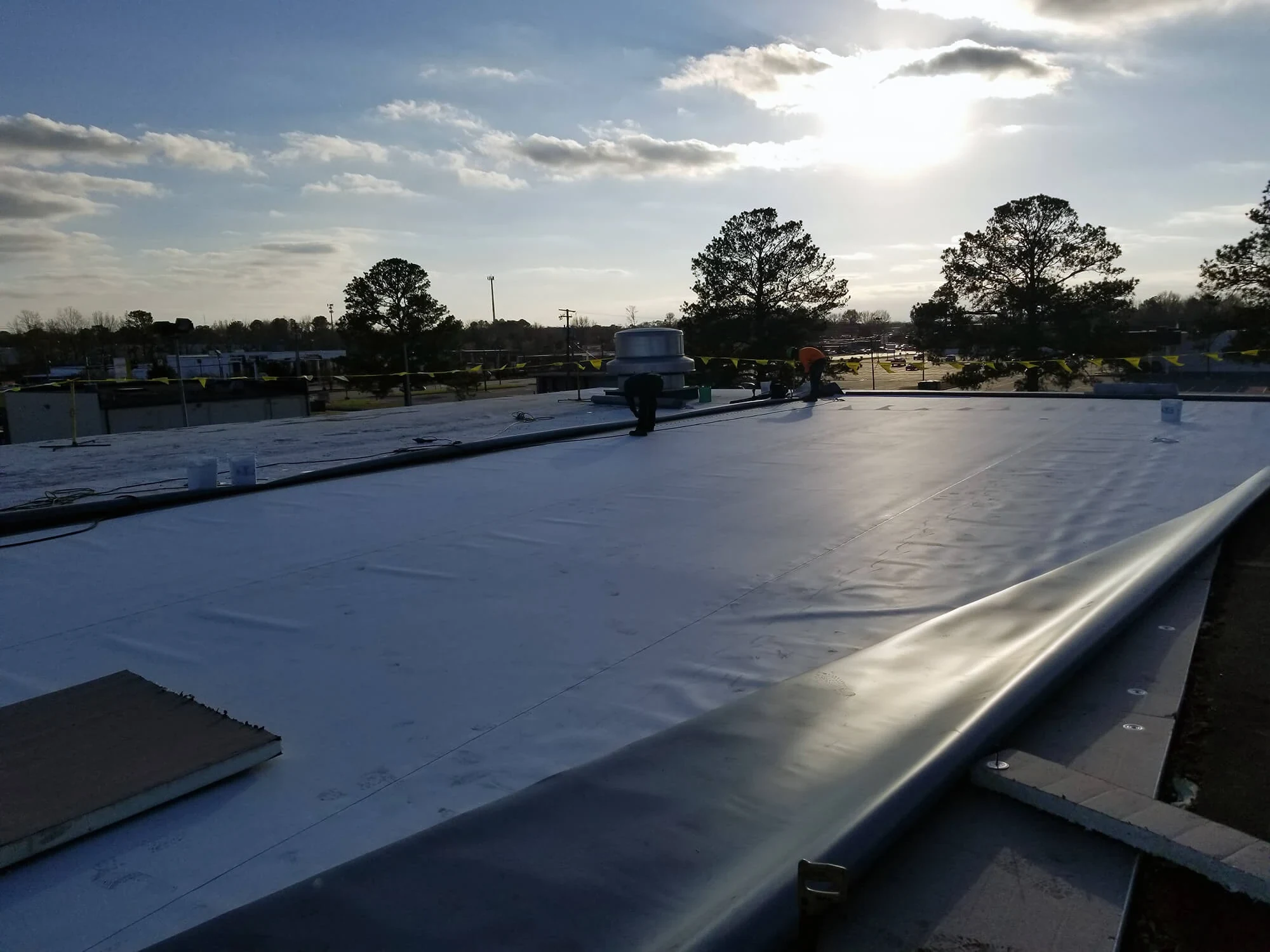
TPO 60 Mil for Green Bay Warehouse and Distribution Roofs
A 60 mil TPO membrane is the entry-level thickness in the single-ply category, and for a lot of the warehouse and light-industrial stock along I-41 and Lawrence Drive it is the right spec once wind uplift, fastener spacing, and budget are checked against the roof's real conditions.
Where 60 Mil Fits the Budget
On a straightforward metal deck warehouse with a standard perimeter and a handful of curbs, 60 mil TPO usually lands at the lowest installed cost per square foot of the single-ply systems we quote. The membrane is thin enough to keep material cost down but still carries a heat-welded seam, which outperforms anything relying on field-applied caulk or tape at the lap.
We run the lifecycle math against a 15 to 20 year hold, not simply the day-one number. On a roof with light foot traffic and no rooftop solar or heavy mechanical loading, 60 mil holds up fine and the owner saves real money versus stepping up to 80 mil for coverage they will not use.
Fastening Patterns and Wisconsin Wind-Snow Loads
Northeast Wisconsin fastening schedules have to account for wind uplift at the field, perimeter, and corner zones, but snow drift against parapets and screen walls changes the load picture too. A mechanically attached 60 mil system needs a plate and fastener count set to the building's exposure category and roof height, not a generic table.
Where a parapet or a stepped roofline lets drifted snow build past design depth, we flag it before the fastening pattern is finalized. Correcting the pattern on paper costs nothing. Correcting it after a wind event that lifted a field seam costs a reroof.
- Confirm exposure category and roof height before setting fastener spacing
- Map parapets and screen walls for likely drift-loading zones
- Probe every heat-welded seam during the post-install walk
- Verify application temperature at time of install against the manufacturer's window
- Check for oil or grease exhaust discharge before finalizing membrane choice
Seam Performance Through Freeze-Thaw Cycles
A hot-air welded TPO seam is a fused polymer bond, and it holds up better than adhered systems through the freeze-thaw swings that run from a January cold snap into a 40-degree thaw the same week. The membrane contracts and expands as a sheet, and the seam moves with it instead of separating at the lap.
We still probe every welded seam during the post-install walk and again at the first-year inspection, because a cold-weather install outside the membrane's application temperature window is the most common cause of a weld that looks good but is not fully fused.
Chemical and Vapor Exposure Near Paper and Food Plants
A 60 mil TPO membrane resists most of the low-concentration steam and exhaust condensate that drifts across roofs near the paper and packaging operations around De Pere and the west side mills, but it is not the top choice where exhaust fans discharge oils or grease directly onto the membrane surface. In that case we usually move the spec to PVC.
For cold storage and food processing buildings, vapor drive from the conditioned interior into the roof assembly matters more than the membrane surface itself. TPO does not solve a vapor problem by itself; the vapor retarder and insulation layer under it do the work, and we spec that layer independently of the membrane choice.
What Owners Ask Before Approving a 60 Mil Spec
Is 60 mil TPO too thin for a Green Bay winter?
No. Thickness affects puncture resistance and long-term wear more than cold-weather performance. The seam weld and the fastening pattern matter more for snow and wind than the mil thickness alone.
Does 60 mil cost significantly less than 80 mil?
Material cost is lower, and on a low-traffic roof with a simple perimeter the difference can be worth banking. On roofs with heavy rooftop equipment traffic or long hold periods, the gap in material cost often gets erased by earlier wear.
Can 60 mil TPO go over an existing roof?
Sometimes, as a recover assembly with new insulation and a cover board, if the existing deck and structure can carry the added dead load and the substrate passes a moisture scan first.
How does snow load affect the membrane itself?
Snow load is mostly a structural and fastening question, not a membrane question. We check drift patterns at parapets and screen walls and adjust the fastening plan, but the TPO sheet itself is rated for the same loads regardless of drift depth.
What voids a TPO warranty fastest in this climate?
Installing outside the manufacturer's minimum application temperature and skipping the wet-insulation check before overlay are the two most common issues we see on service calls.