
Commercial Project Types
Food Processing Facility Roofing in Green Bay, WI
Cheese, Sausage, and Cold-Chain Plants Load a Roof Differently Than a Warehouse Does
Green Bay runs on food processing the way some cities run on finance. Schreiber Foods is headquartered here, American Foods Group runs meat processing out of the city, and a ring of smaller cheese, sausage, and dairy plants fill in the gaps between them. Every one of those buildings puts a different set of demands on a roof than a typical dry warehouse, and we price the work accordingly.
Steam and Condensation Load Change the Deck Spec Before Membrane Comes Up
A cheese make room or a pasteurizer floor throws off steam and humidity all shift, and that moisture finds the roof deck from underneath. On older plants with a steel deck and a built-up or modified bitumen system, we check for interior condensation staining and deck corrosion before we ever quote a membrane, because a wet insulation board under a new roof is a warranty claim waiting to happen.
Vapor drive is the real variable here, not simply insulation R-value. A processing floor running hot and humid against a Wisconsin winter deck creates a pressure difference that pushes moisture upward through any gap in the vapor retarder, so we spec the retarder and the insulation package as one system rather than picking a membrane first and working backward.
Washdown Floors Push Roof Drains and Curb Flashing to Their Limits
USDA and food-grade sanitation protocols mean these plants get hosed down daily, and a lot of that water and cleaning chemical exhausts through rooftop drains, scuppers, and floor-drain vent stacks that penetrate the roof. We size and flash those penetrations for volume, not simply for a standard rain event, because a plant floor drain backing up onto a roof deck during a washdown cycle is a different failure mode than typical stormwater ponding.
Curb flashing around rooftop exhaust fans and makeup-air units takes more abuse on a food plant than almost any other building type, since grease-laden and moisture-laden air passes through those units around the clock. We detail those curbs with extra membrane lap and mechanical fastening rather than relying on caulk alone.
Ammonia and Glycol Refrigeration Racks Are a Structural Question, not simply an Electrical One
Cold-chain plants supplying grocery and food-service distribution around the port and the I-41 corridor run ammonia or glycol refrigeration systems with rooftop condensers and piping racks. Those racks add concentrated point loads the original roof structure may or may not have been engineered for, especially on plants that have added capacity in phases over decades.
Before we quote a reroof under an existing condenser array, we want to know the rack's weight and footprint, not simply its footprint on paper. Uneven load distribution around unistrut supports is one of the more common causes of premature membrane wear we find on processing plant roofs in this market.
Sanitation Standards Push These Plants Toward White Membrane and Simple Field Details
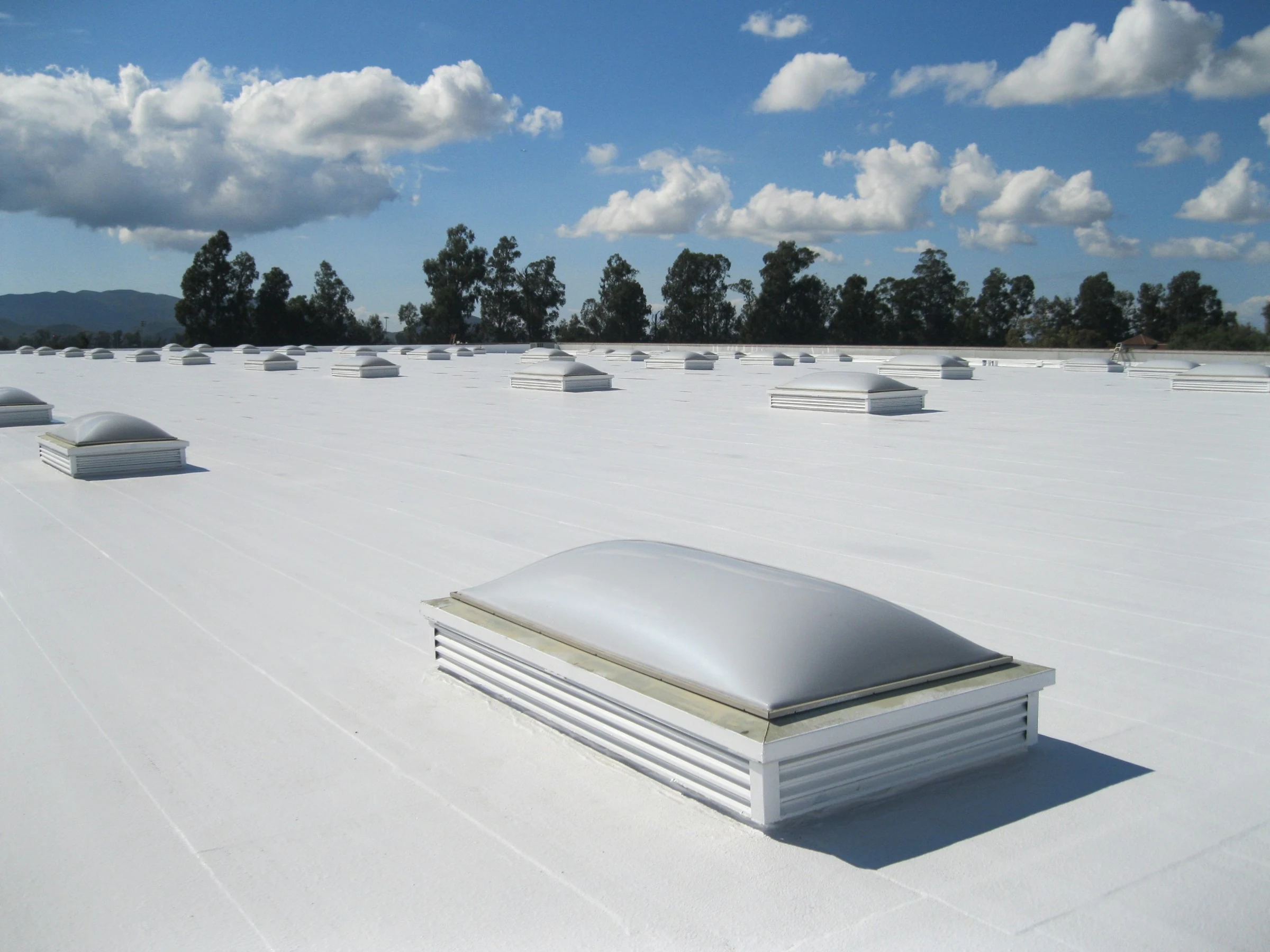
Most food processing operators here specify white TPO or PVC over EPDM, partly for reflectivity and partly because a white membrane makes ponding water, debris, and animal activity visible during routine roof walks, which matters on a facility that answers to USDA or third-party food safety audits.
- Deck and vapor-retarder condition, checked before membrane selection on any humid processing floor
- Roof drain and scupper capacity sized for washdown volume, not simply rainfall
- Rooftop refrigeration and exhaust curb flashing detailed for continuous grease and moisture exposure
- Structural load review under existing condenser and piping racks before reroofing
- White single-ply membrane specified for visibility during sanitation-driven roof inspections
- Phased work scheduling that keeps production lines running through the reroof
Scheduling Around a Plant That Doesn't Stop
Most of the food and dairy plants in this market run multiple shifts, and a full shutdown for roofing is rarely on the table. We phase reroofing work in sections tied to the plant's own production and sanitation windows, coordinating with the operator's maintenance team on noise, dust containment, and any temporary weather protection needed over open sections at end of shift.
Winter is the harder season to schedule around. A February tear-off over an active processing floor means tighter dry-in windows and more attention to ice damming at parapet walls, so we push toward late spring through early fall for anything beyond emergency repair when the plant's own production calendar allows it.
What Green Bay Food Plant Managers Ask Before Signing Off
Does a food-grade roof need a different membrane than a standard commercial roof?
Not always a different membrane, but often a different detailing standard. White TPO or PVC is common, and we pay closer attention to drain capacity, curb flashing, and vapor control than we would on a typical retail or office roof.
Can reroofing happen without shutting down production?
In most cases, yes. We phase the work section by section and schedule around shift changes and sanitation windows, though full shutdowns are sometimes the cleaner option for smaller plants that can absorb a short closure.
How do you handle rooftop ammonia refrigeration equipment during a reroof?
We coordinate directly with the plant's refrigeration contractor or in-house engineer. Structural review of the rack supports happens before we finalize the reroof scope, and we don't disturb piping or condensers without their sign-off.
What causes early membrane failure on processing plant roofs specifically?
Vapor drive from interior humidity is the most common cause we see, followed by curb flashing fatigue around exhaust and refrigeration penetrations that see constant temperature and moisture cycling.
Do you work with USDA-regulated facilities on roofing timelines?
Yes. We build our schedule around the plant's own sanitation and inspection calendar and communicate directly with facility management on any work that could affect food safety compliance during the project.