
Commercial Project Types
Sports and Recreation Facility Roofing in Green Bay, WI
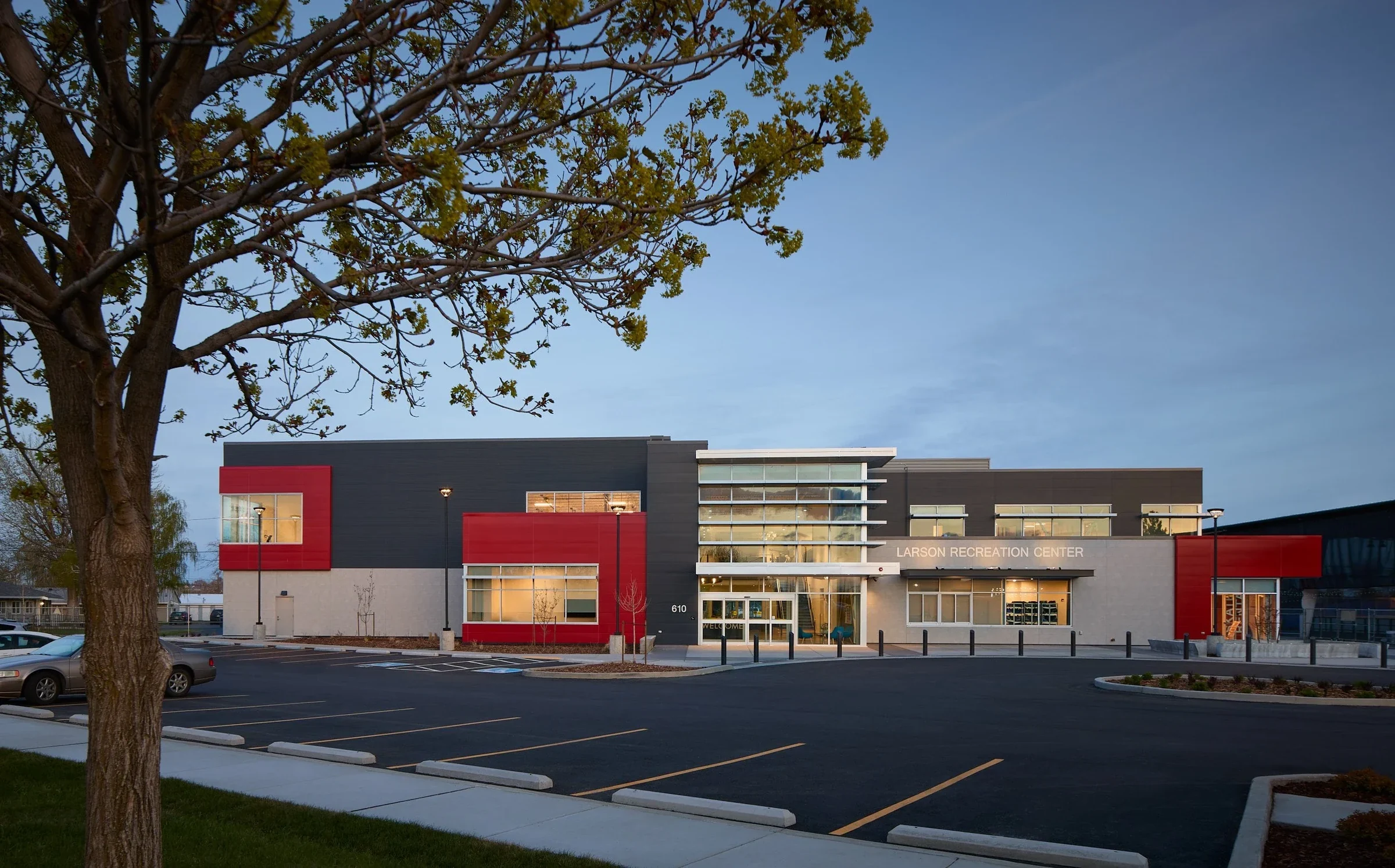
Arenas, Ice Sheets, and Fieldhouses Put Long-Span Structure Ahead of Membrane Choice
Green Bay's sports and recreation building stock runs from the long clear-span roof over the Resch Center and adjacent Resch Expo to the double-sheet ice arenas, fieldhouses, and rec-league facilities spread across Brown County, plus the hotels and event space that grew up around the Titletown district. These buildings share a structural problem that a typical retail or office roof doesn't have: long clear spans with concentrated mechanical and lighting loads, often over occupied spaces that can't tolerate a leak during an event.
Long Clear-Span Structure Sets the Ceiling on Every Roofing Decision
An arena or fieldhouse roof spans distances a standard commercial building never approaches, which means the structural deck and framing were engineered to a tighter margin than a typical big-box roof. Before we recommend a heavier insulation package or a recover system, we confirm what added dead load the original structure can actually absorb, because guessing wrong on a 200-foot clear span carries more consequence than it would on a 40-foot bay warehouse.
Ice Arenas Fight Condensation on a Different Timeline Than Any Other Building
A double-sheet ice facility keeps interior air near freezing over an ice surface while outside conditions swing from summer humidity to winter cold, and that combination drives condensation risk at the roof deck that a standard vapor barrier calculation doesn't fully capture. We pay close attention to vapor retarder continuity and deck ventilation on these buildings, since condensation dripping onto ice sheets or bleacher seating is a maintenance complaint that starts at the roof, not the refrigeration system.
Rooftop Lighting Rigs and Scoreboard Structures Add Non-Standard Point Loads
Arena and fieldhouse roofs often carry catwalks, lighting grids, or scoreboard support structures suspended from or bearing on the roof framing, and each of those attachment points is a penetration and a load concentration that needs its own flashing detail and structural sign-off. We treat these attachments as permanent fixtures to design around rather than obstacles to work past during a reroof.
Event Scheduling Drives the Construction Calendar, Not the Other Way Around
These facilities run booked event calendars, hockey seasons, tournaments, expos, community programming, and a roofing schedule has to work inside the gaps rather than the other way around. We plan tear-off and dry-in around the facility's own booking calendar, favoring the off-season windows between major programming when a building's operator has one, and phase work to keep occupied areas weathertight through any event that can't be moved.
- Structural dead-load capacity confirmed before specifying any added insulation or recover system
- Vapor retarder continuity checked specifically at ice-sheet buildings where condensation risk is highest
- Lighting rig, catwalk, and scoreboard attachment points flashed and structurally reviewed individually
- Work phased around booked event calendars rather than a standard weekday construction schedule
- Snow load monitored closely on long clear-span roofs through the winter season
- Membrane selected for reflectivity and long-term UV performance over large uninterrupted fields
Snow Load Monitoring Matters More on Long-Span Arena Roofs
A long clear-span roof accumulates and redistributes snow differently than a series of shorter bays, and drift patterns around HVAC penthouses or roof-level mechanical screens can concentrate load in ways the original design didn't fully anticipate decades later. We monitor these zones through heavy snow winters and flag any drift accumulation pattern worth bringing to the facility's structural engineer, rather than treating snow removal as a purely reactive task.
We do not perform roofing work for the Green Bay Packers or Lambeau Field; our work in this category covers the broader arena, ice-sports, and recreation building stock around the Titletown district and Brown County, priced the same way we price any long-span commercial roof, on structural condition and lifecycle cost per square foot.
Questions Facility Managers Ask About Arena and Ice-Sport Roofing
Why does structural capacity matter more on an arena roof than a typical commercial building?
Long clear spans are engineered to a tighter load margin than shorter-bay commercial buildings, so any added roofing weight needs structural confirmation before we specify it.
Does an ice arena roof need special vapor control?
Yes. Keeping near-freezing air under a roof deck exposed to normal seasonal temperature swings creates a condensation risk that a standard building doesn't have, so vapor retarder detailing gets extra attention.
Can roofing work happen during an active event season?
We plan around the facility's booking calendar and favor off-season windows, phasing occupied-area protection so events that can't be moved stay covered.
How do you handle roof penetrations for lighting rigs and scoreboards?
Each attachment point gets its own flashing detail and, where structural load is involved, sign-off from the appropriate engineer before we finalize the roofing scope around it.
Does heavy snow affect long-span arena roofs differently than other buildings?
Drift patterns around rooftop mechanical structures can concentrate snow load unevenly, so we monitor those zones specifically through winter rather than relying on a general snow-load assumption.