Commercial Project Types
Cold Storage Roofing in Green Bay, WI
Freezer and Cooler Roofs Fail From the Inside Before They Ever Leak From Above
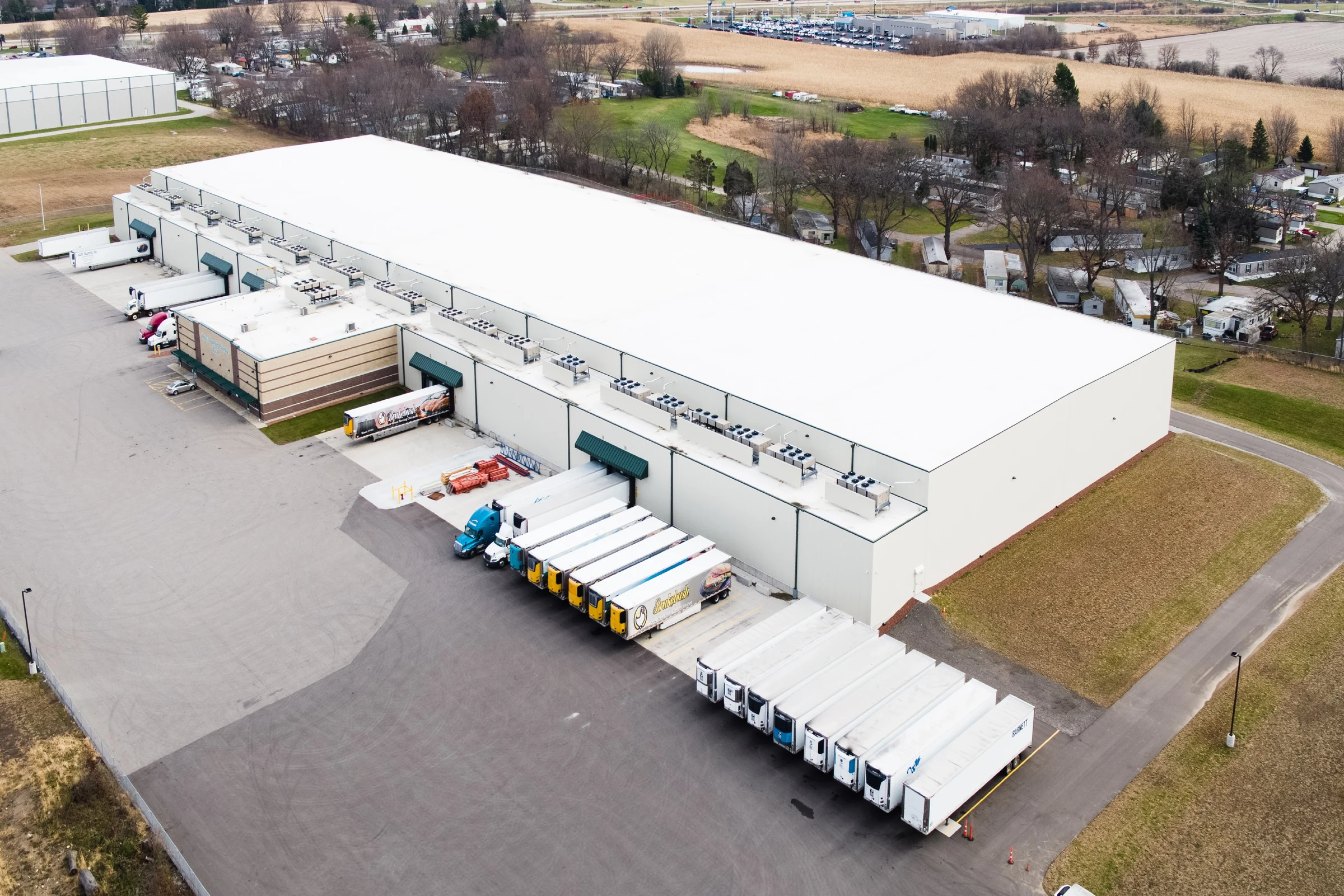
Green Bay's food-processing base feeds a real cold-storage and reefer-distribution sector, from port-adjacent warehouses handling frozen protein and dairy to third-party cold-chain operators serving the wider Fox Valley. A freezer or cooler roof carries a different insulation and vapor-control problem than any other building type in this market, and it's the first thing we design around.
Vapor Drive Is the Central Design Problem, Not an Afterthought
Keeping a warehouse floor at negative temperatures against a Wisconsin summer creates a serious vapor pressure difference across the roof assembly, and warm humid air will find any gap in the vapor retarder and drive moisture into the insulation. Wet insulation loses R-value fast and doesn't dry out on its own inside a sealed freezer envelope, which is why we treat the vapor retarder as the most important layer in the whole system, not a formality under the membrane.
On existing cold storage buildings, we test insulation moisture content before quoting recover work, because installing new membrane over already-wet insulation just traps the problem under a new roof.
Insulation Packages Run Thicker Than Standard Commercial Work
Freezer roofs typically call for a higher R-value insulation package than a standard warehouse, and the added thickness changes fastener length, parapet height details, and sometimes the tapered insulation design for drainage. We spec these packages to the operating temperature of the space below, not a generic commercial default, since a -10 degree freezer and a 35 degree cooler have different vapor loads even under the same roof.
Ice Damming at Parapets and Curbs Is a Freeze-Thaw Problem Specific to This Climate
Northeast Wisconsin winters put these roofs through repeated freeze-thaw cycling, and cold storage buildings are especially prone to ice buildup at parapet walls and rooftop curbs because the roof surface itself often runs colder than an adjacent conditioned building's roof would. We detail drainage and check for ice damming during winter maintenance visits, since trapped meltwater against a parapet base is one of the more common points of failure we see on these buildings.
Rooftop Refrigeration Equipment Adds Structural and Vibration Load
Ammonia, glycol, or Freon-based refrigeration racks sit directly on many cold storage roofs, and the vibration from compressors works fastener patterns and membrane seams around the equipment curb harder than static rooftop units do. We check curb flashing and fastener security around refrigeration equipment on every inspection cycle rather than treating it as a one-time install detail.
- Vapor retarder continuity tested and repaired before any recover or reroof work begins
- Insulation moisture content checked on existing buildings before quoting a recover system
- R-value and tapered insulation design matched to the actual operating temperature below
- Parapet and curb drainage detailed against Wisconsin's freeze-thaw and ice-damming pattern
- Refrigeration rack vibration accounted for in fastener spacing and curb flashing
- Winter inspection cycle scheduled specifically to catch ice buildup before it causes interior damage
Reroofing Without Losing Temperature Control
A cold storage operator can't afford to lose the building envelope mid-project, so phasing matters more here than almost any other roof type we work on. We section the work, keep dry-in protection tight at the end of every shift, and coordinate closely with the facility's refrigeration engineer on any work near active equipment, because a temperature excursion on a full freezer inventory is a cost that dwarfs the roofing budget itself.
Lifecycle cost per square foot on a cold storage roof has to include the insulation's real-world performance over time, not simply membrane warranty length. A cheaper vapor retarder that fails in year eight and lets moisture into the insulation costs far more to remediate than the upfront savings, and we price that tradeoff explicitly rather than letting it get lost in a single bottom-line number.
What Cold Storage Operators Usually Want to Know
How is a freezer roof different from a standard warehouse roof?
The vapor retarder and insulation thickness are designed around the interior operating temperature, not a generic commercial spec, because the vapor pressure difference across a freezer roof is much greater than across a conditioned warehouse.
Can you tell if insulation is already wet without tearing off the roof?
We can get a good read with moisture scanning before committing to a scope, which helps us decide between recover and full tear-off before opening the roof up.
Does Green Bay's winter climate make ice damming worse on cold storage buildings?
Yes. These roofs often run colder at the surface than a conditioned building's roof, which changes how snow melts and refreezes at parapets, so we watch that closely during winter visits.
How do you reroof a facility that can't lose temperature control?
We phase the work into sections small enough to dry-in completely each shift and coordinate the schedule with the facility's own refrigeration and operations team.
What's the biggest mistake you see on older cold storage roofs in this market?
Recover work installed over insulation that was already wet. It looks fine for a year or two and then the R-value collapses and the interior racking system starts seeing condensation.