
Commercial Project Types
Manufacturing Plant Roofing in Green Bay, WI
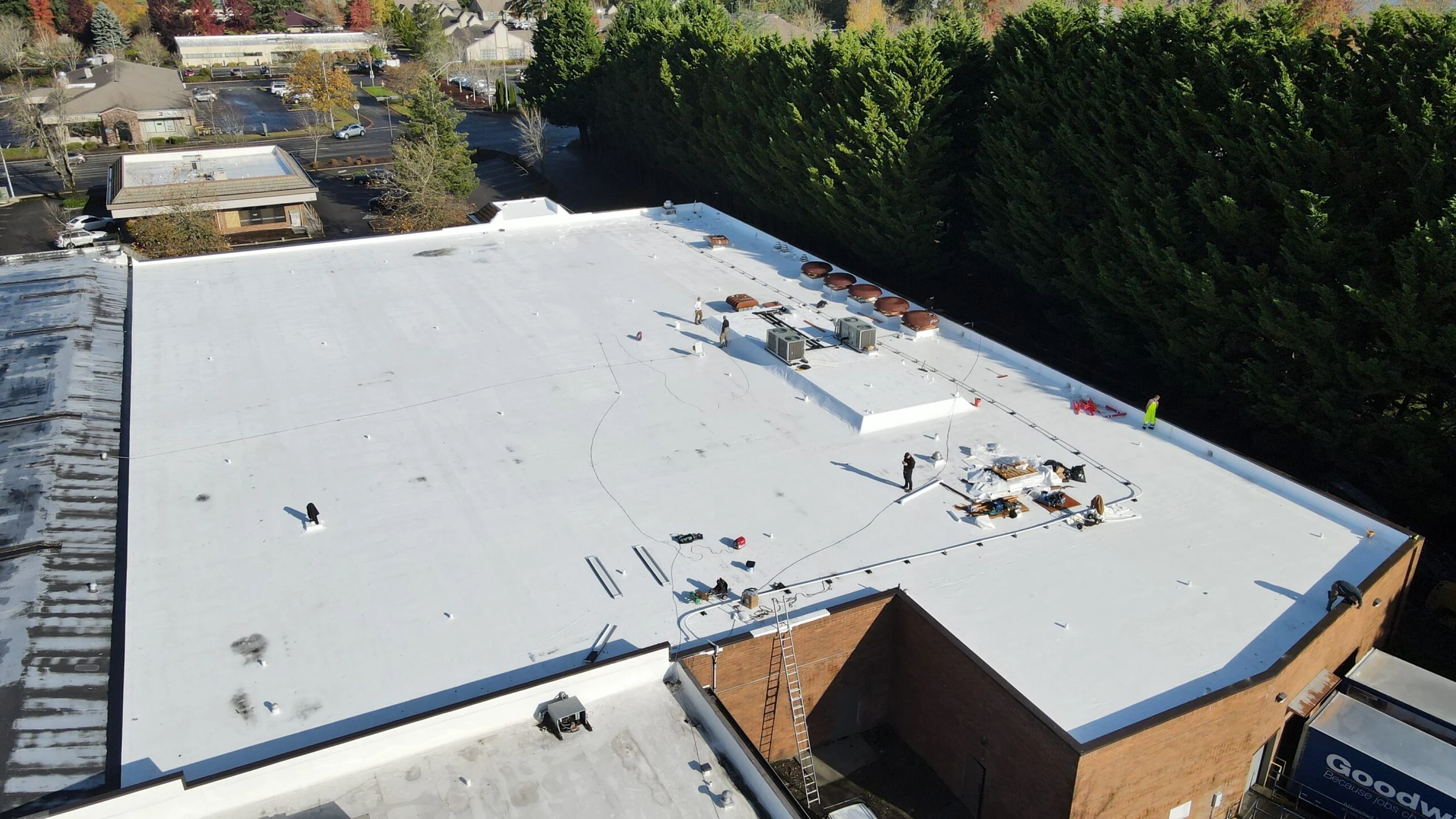
Paper Mill and Heavy-Manufacturing Roofs Along the Fox River Carry Decades of Add-On Load
Green Bay has been a paper town for over a century, and the Fox River corridor still carries mills operated by Georgia-Pacific and Procter & Gamble alongside converters, box plants, and metal fabricators spread through the industrial blocks east and west of downtown. These roofs tend to be old, large, and layered with decades of rooftop additions, which is a different problem than a clean new-construction industrial shell.
Steam Plumes and Stack Emissions Age a Roof From the Top Down
Paper mill roofs sit under near-constant steam plume exposure from drying operations, and that moisture cycling degrades membrane and flashing faster than dry heat alone would. On mills running older kraft or tissue lines, we also see accelerated wear on membrane closest to exhaust stacks, where condensate carrying mild acidity drips back onto the roof surface over years of operation.
We inspect membrane condition in a wider radius around active stacks and vents than a standard roof survey would call for, since the wear pattern on these buildings is rarely uniform across the field.
Steel Deck Corrosion Is the First Thing We Check, Not the Last
A lot of Green Bay's manufacturing stock dates to a period when steel deck was standard and insulation packages were thinner than what current energy codes call for. Corrosion around old roof penetrations, HVAC curbs, and expansion joints is common enough on these buildings that we budget deck repair into the estimate rather than treating it as a change order surprise.
Where corrosion is isolated, we spot-repair and recover. Where it's widespread, a full tear-off with new deck sections makes more sense on lifecycle cost than layering another membrane over compromised steel, even though the upfront number is higher.
Decades of Rooftop Additions Complicate Every Penetration Detail
Manufacturing plants that have been in continuous operation for generations rarely have a clean roof plan. Conveyor crossovers, dust collection ductwork, compressor pads, and abandoned equipment curbs from processes that no longer exist all show up on the same field. We catalog every penetration during the initial walk, flag the ones flashed incorrectly or improvised over the years, and price remediation as part of the scope rather than discovering it mid-tear-off.
Winter Load and the Freeze-Thaw Cycle Set the Maintenance Calendar
Northeast Wisconsin winters put real snow load on wide manufacturing spans, and the freeze-thaw swings common from November through March work seams and flashing harder than a steady cold climate would. We time inspection and preventive maintenance visits for fall, before snow load season, and again in spring to catch anything that opened up over winter before it turns into an interior leak on a production floor.
- Membrane wear surveyed in a wider radius around stacks and exhaust vents than a standard field inspection
- Steel deck corrosion checked at every curb, penetration, and expansion joint before quoting
- Every rooftop addition and abandoned curb from prior processes cataloged before tear-off
- Insulation package upgraded to current energy code where the deck can support the added weight
- Fall and spring inspection cycles designed around Wisconsin's snow-load and freeze-thaw calendar
- Phased scheduling around production shifts to limit downtime on active manufacturing floors
Reroofing an Occupied Plant Without Stopping the Line
Most manufacturing operators in this market can't shut down for a reroof, so we section the roof into work zones tied to what's running below. Dry-in protection at the end of each shift matters more here than on a vacant building, and we plan crane and material staging around active loading docks and rail spurs rather than assuming open yard access.
Lifecycle cost per square foot is the number that actually drives these decisions for plant engineers, not the lowest bid line item. A recover system might save money upfront but shorten the interval before the next full tear-off on a roof already carrying heavy rooftop equipment, and we lay out both paths with real numbers so the plant can budget capital against the timeline that fits their operation.
Common Questions From Plant Engineers and Facilities Managers
Can you reroof a manufacturing plant in sections while production continues?
Yes, and it's the normal approach on plants that can't shut down. We break the roof into zones and schedule tear-off and dry-in around shift changes and weather windows.
How do you handle roofs with decades of unrecorded rooftop additions?
We walk the entire field and document every penetration, curb, and piece of abandoned equipment before pricing the job, so remediation is part of the original scope instead of a change order later.
Does steam exposure from paper mill operations really shorten membrane life?
It can, particularly near active stacks and vents where condensate cycling is constant. We inspect those zones more closely and sometimes spec heavier membrane thickness there specifically.
What's the biggest structural concern on older manufacturing roofs here?
Steel deck corrosion, usually concentrated around old penetrations and curbs rather than spread evenly across the field. We check it before recommending recover versus tear-off.
How does Wisconsin's freeze-thaw cycle affect a manufacturing roof compared to other regions?
It works seams, flashing, and expansion joints harder than a steady climate would, which is why we schedule inspections in both fall and spring rather than once a year.