
Commercial Project Types
Warehouse Roofing in Green Bay, WI
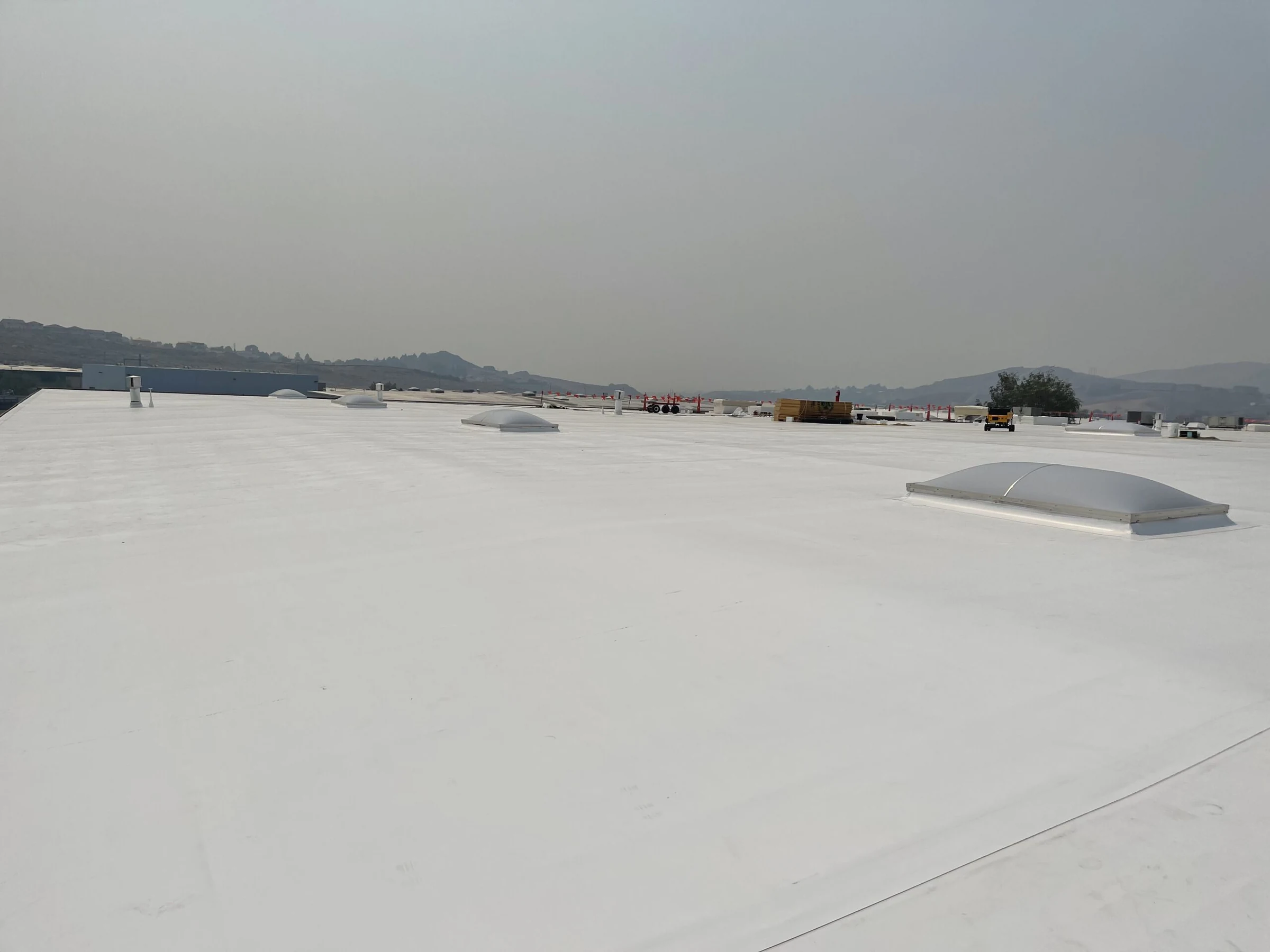
Flat Single-Ply Roofs Cover Most of the Warehouse Stock Along I-41 and the Port
Dry warehouse space has grown steadily along the I-41 corridor through Howard, Lawrence, and Ashwaubenon, and it's a different animal than the cold storage and processing buildings that share the same industrial parks. These are large flat single-ply roofs, usually steel deck, and the pricing conversation starts with drainage and deck condition rather than the membrane brand.
Drainage Design Matters More on These Roofs Than Membrane Choice
A 100,000-square-foot-plus warehouse roof has to move water fast across a huge flat field, and undersized or poorly placed roof drains are the most common cause of ponding water we find on this building type. Before we quote a reroof, we check existing drain locations against the roof's low points, because adding drains or reworking the slope with tapered insulation sometimes solves a chronic ponding problem better than any membrane upgrade would.
Scuppers and overflow drains matter just as much, especially with the heavier rain events this region sees in late summer. We size overflow capacity to handle a primary drain blockage, not simply normal flow, since a warehouse full of stacked inventory doesn't tolerate even a short-duration roof leak well.
TPO Is the Default Membrane for a Reason at This Scale
For large flat warehouse fields, TPO single-ply dominates the market here because it welds cleanly over long seam runs, the white surface helps with rooftop equipment visibility during inspections, and material cost per square foot stays competitive against EPDM and PVC at warehouse scale. 60-mil TPO covers most standard warehouse traffic, and we move up to 80-mil on roofs carrying heavier rooftop equipment or more frequent foot traffic from maintenance and tenant improvement work.
EPDM still shows up on older warehouse buildings in this market, and where an ownership group has a standing program designed around EPDM's track record, we'll spec and maintain it rather than pushing a switch that doesn't serve the owner's actual maintenance plan.
Multi-Tenant Warehouses Bring Penetration Problems Single-Tenant Buildings Don't Have
Warehouse parks with multiple tenants under one roof, common around Howard's industrial park and the growth corridor near Lawrence, accumulate rooftop penetrations from independent tenant HVAC installs and dock equipment over time, often without coordination between tenants. We catalog every penetration during inspection and price remediation of any curb that was flashed by whoever the tenant hired rather than by a roofing contractor.
Snow Load and Roof Drain Freeze-Ups Drive the Winter Maintenance Calendar
Wide warehouse spans carry real snow load in a Northeast Wisconsin winter, and roof drain lines running through unheated space can freeze, backing up meltwater onto the membrane during a thaw. We check drain line heat trace and clear debris from drain bowls before the first hard freeze each fall, since a frozen drain during a January thaw is a preventable problem that shows up as an interior leak instead.
- Existing drain locations checked against actual roof low points before quoting reroof scope
- Overflow scupper capacity sized for a blocked primary drain, not simply normal rainfall
- 60-mil TPO specified for standard traffic, 80-mil where rooftop equipment or foot traffic is heavier
- Every tenant-installed penetration cataloged and re-flashed to roofing-contractor standard
- Drain line heat trace and debris clearing scheduled before first hard freeze each fall
- Recover versus full tear-off priced on lifecycle cost, not simply lowest upfront number
Pricing a Warehouse Roof on Lifecycle Cost, not simply Membrane Cost
Warehouse owners in this market are usually thinking in terms of holding period and lifecycle cost per square foot, especially where the building sits inside a REIT or property management portfolio. We lay out recover-versus-tear-off numbers against the roof's remaining structural life and the drainage fixes needed either way, so the decision reflects the building's actual hold timeline rather than a single low bid.
Questions Warehouse Owners and Managers Ask Us Most
What causes most warehouse roof leaks in this market?
Ponding water from undersized or poorly placed drains, and tenant-installed rooftop penetrations that weren't flashed to a professional standard. Both show up more often than membrane failure itself.
Is TPO always the right choice for a large warehouse roof?
It's the default for good reason at this scale, but we'll spec EPDM or PVC where an owner's existing program, budget, or building specifics call for it.
How do you handle a multi-tenant warehouse with penetrations from different contractors?
We document every penetration during the roof walk and price re-flashing anything that doesn't meet a proper roofing standard, regardless of who installed it originally.
Does snow load change how you inspect a warehouse roof here?
Yes. We add a fall inspection focused on drain lines and heat trace specifically because frozen drains during winter thaws are a recurring cause of interior leaks in this climate.
Should we recover or fully tear off an aging warehouse roof?
It depends on deck condition and remaining structural life. We price both paths and walk owners through the lifecycle cost difference rather than defaulting to whichever option is cheaper upfront.