Commercial Project Types
Distribution Center Roofing in Green Bay, WI
Port Access, Rail Spurs, and Dock Count Push Distribution Roofs Past a Standard Warehouse Spec
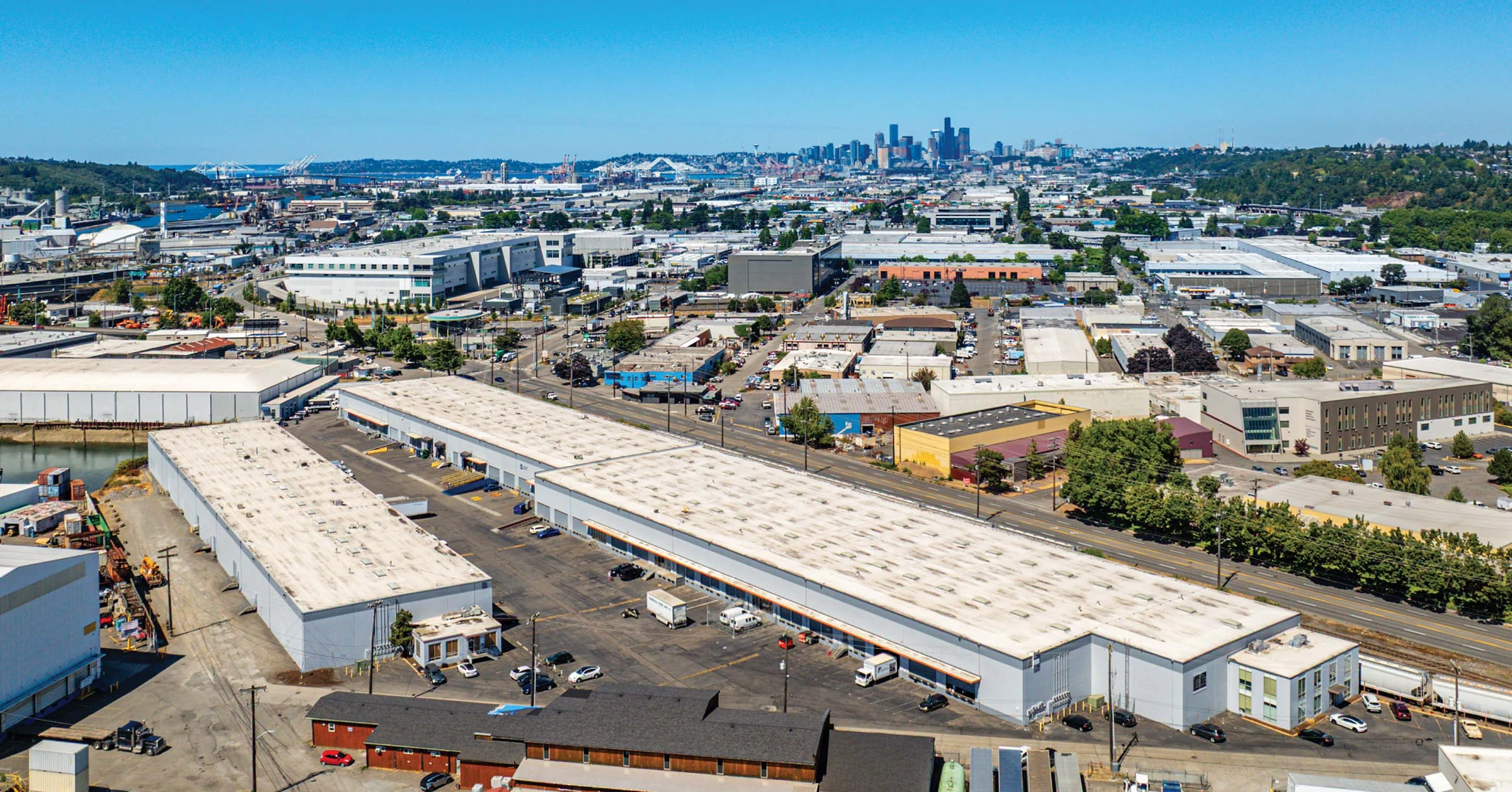
Distribution buildings clustered around the I-41/I-43 interchange and the rail-served blocks near the Port of Green Bay carry more roof complexity than a typical dry warehouse. Bulk cargo dust, taller clear-height construction, and speculative shells built for a tenant nobody had identified yet all change how we scope these roofs before a membrane decision gets made.
Port-Adjacent and Rail-Served Buildings Collect Bulk Material Dust the Rest of the Market Doesn't See
The Port of Green Bay moves limestone, coal, road salt, grain, and petroleum products, and distribution buildings sited near the terminal or along active rail spurs feeding it pick up airborne dust from those operations, settling on membrane and drain strainers faster than a comparable building sitting inland.
We check drain and scupper strainers on a shorter cycle at these buildings, since fine limestone or grain dust can cake a strainer solid in a way ordinary roof debris doesn't, and a blocked drain during a heavy rain event turns into ponding on an otherwise well-designed roof.
Conveyor and hopper penetrations at bulk-handling buildings also bring their own flashing detail, since vibration from material handling equipment works those curbs harder than a static rooftop unit would over the same number of years.
Speculative Shells Get Built to a Base Spec, Then Renegotiated the Day a Tenant Signs
A lot of the newer distribution product along I-41 and I-43 went up speculatively, roofed to a conservative base-building standard before any tenant was identified. When a 3PL or e-commerce operator signs a lease, the fit-out often adds rooftop equipment the original design didn't fully anticipate: extra HVAC tonnage for a conditioned pick module, new sprinkler riser penetrations, sometimes conduit stubbed for future rooftop solar.
We get involved at that fit-out stage almost as often as at initial construction, reviewing what the incoming tenant's engineer wants to add against the roof's original design loads and warranty terms before anyone starts cutting new curbs into a membrane that's barely broken in.
Taller Clear-Height Buildings Change the Wind-Uplift Math at the Roof Edge
Newer distribution buildings run clear heights well above what a building from the 1990s was built to, and that extra height changes wind loading at the parapet and roof edge more than most tenants realize. FM Global and other insurers score these buildings on uplift resistance specifically because taller walls funnel more wind pressure to the roof perimeter than a low-slung box sees.
We detail edge metal, coping, and perimeter fastening to the uplift rating the building's insurance carrier actually requires, not a generic commercial minimum, since a failed edge detail on a tall distribution building is a bigger loss event than the same failure on a shorter retail structure.
Cross-Dock Buildings Split Rooftop Traffic Across Two Full Building Faces
Cross-dock distribution buildings load and unload on opposite sides of the building, which means dock canopy framing, lighting, and drainage complications run the length of two faces instead of one. We map both dock zones as separate inspection categories rather than assuming the wear pattern on one side predicts the other.
Grocery and food-distribution tenants add a further wrinkle here, since a cross-dock cold-chain facility often mixes ambient and refrigerated dock positions under one roof, and each type of dock brings a different condensation and drainage profile to track.
- Drain and scupper strainers checked on a shorter cycle at port-adjacent and rail-served buildings
- Tenant fit-out rooftop additions reviewed against original design loads before new curbs are cut
- Edge metal and perimeter fastening detailed to the building's actual FM Global uplift rating
- Both dock zones on a cross-dock building inspected as separate categories
- Conveyor and hopper penetrations flashed for continuous vibration exposure at bulk-handling sites
- Emergency response scheduling prioritized for round-the-clock distribution tenants
Round-the-Clock Trucking Doesn't Pause for a Slow Response
A distribution center running outbound shipping through the night can't wait until Monday morning for a leak over a staging area to get addressed, and dock canopy roofs specifically see more concentrated water flow during a storm than the open field does. We prioritize emergency response scheduling for active distribution tenants over buildings running more conventional daytime hours.
Winter compounds this. Snow sliding off a taller clear-height roof face can pile up faster at dock approaches than crews expect, and refreezing overnight around canopy gutters is a recurring problem we watch for at these buildings specifically once the first hard freeze sets in.
What Distribution Center Operators Ask Before They Sign Off on a Roofing Plan
Does a building near the port need different roof maintenance than one further inland?
Yes. Bulk material dust from port and rail operations settles on drains and membrane faster than in an inland industrial park, so we check strainers and low points more often at those sites.
What happens when a new tenant wants to add rooftop equipment to a leased shell?
We review the proposed additions against the roof's original design loads and warranty terms before any new curb gets cut, which avoids voiding coverage on a roof that's still under its original manufacturer warranty.
Why does building height matter for wind uplift on a distribution roof?
Taller clear-height buildings funnel more wind pressure to the roof edge and parapet, so we detail perimeter fastening to the insurance carrier's actual uplift requirement rather than a generic minimum.
How do you handle roofs on cross-dock buildings with dock positions on both sides?
We treat each dock face as its own inspection zone, since wear and drainage conditions on one side don't reliably predict the other, especially where refrigerated and ambient docks sit on the same roof.
Can you respond quickly to an active distribution facility running outside normal business hours?
Yes, and we prioritize scheduling for round-the-clock operators, since a delayed response over an active staging area carries more cost than the same delay at a standard daytime tenant.