
Commercial Roofing Services
Modified Bitumen Roofing in Green Bay, WI
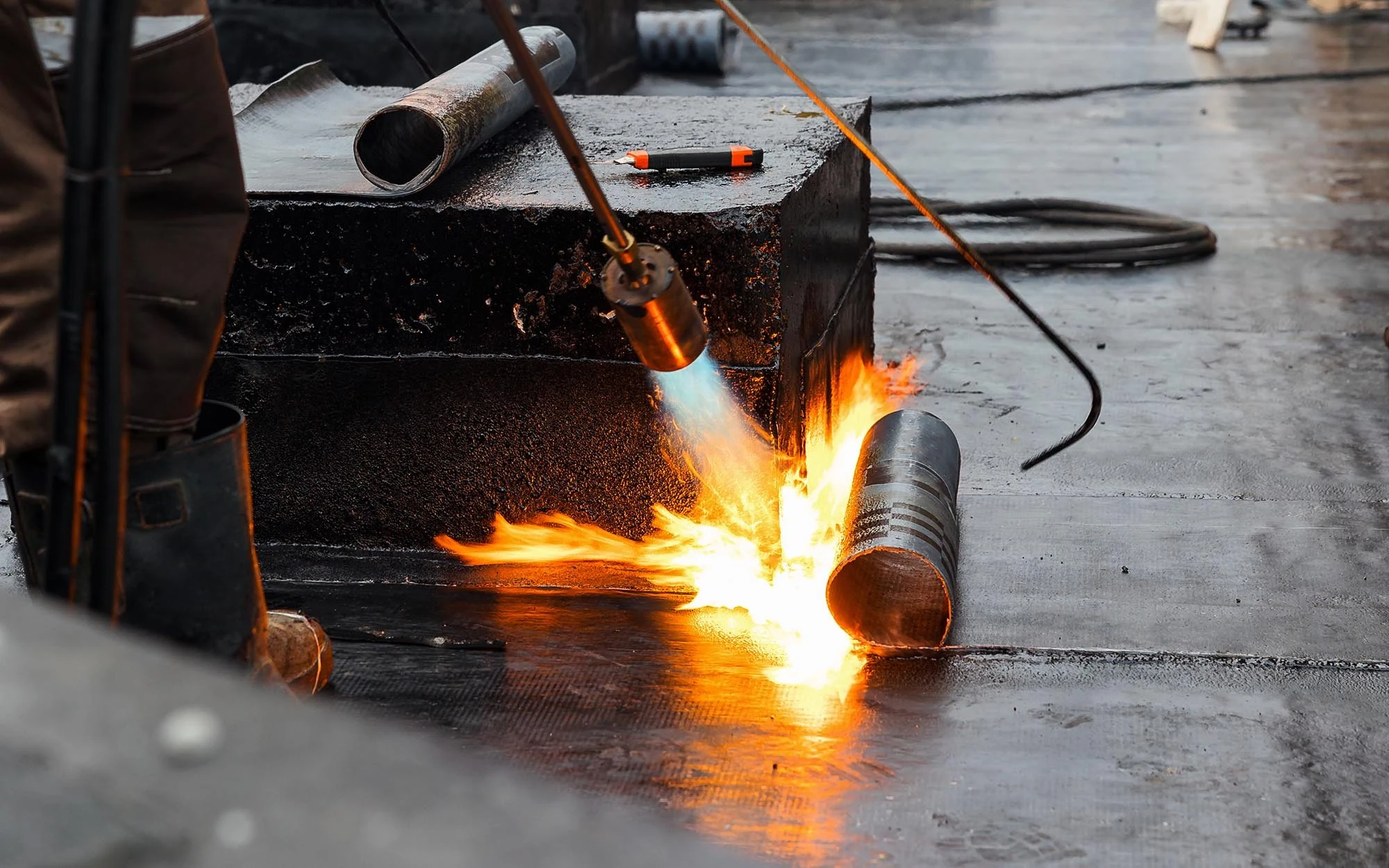
Modified Bitumen Roof Work for Green Bay's Older Commercial Buildings
A lot of the commercial buildings in downtown Green Bay and the older industrial sections near the mills were originally roofed in asphalt, and when those roofs reach the end of life, modified bitumen is often the most direct match to the deck, insulation, and flashing already in place. We install and repair SBS modified bitumen systems across that older building stock.
Why This System Still Fits So Much of the Existing Stock
Switching an old built-up or asphalt roof to a single-ply membrane sometimes means redoing more of the roof edge and flashing detail than staying with a bitumen-based system, since the existing gravel stops, base flashings, and drain details were designed around asphalt roofing in the first place. SBS rubberized asphalt gives that same asphalt-based approach real flexibility that older built-up roofing never had.
We treat SBS modified bitumen as a meaningfully better system than a straight built-up roof rather than a modern label on the same old idea. The rubber compounding is what changes the roof's actual field performance through freeze-thaw cycling.
Torch-Applied, Cold-Adhesive, or Self-Adhered
Application method matters as much as the membrane itself. Torch-applied SBS bonds through direct heat and is common where fire code and site conditions allow it. Cold-adhesive and self-adhered systems avoid open flame entirely, which matters on occupied buildings or roofs near other flammable materials, and we match the method to the building's fire code restrictions and the crew's actual site conditions before finalizing a spec.
Base sheet and cap sheet compatibility with the existing deck and insulation gets checked before either application method is finalized. Mismatched components are a common source of premature failure on modified bitumen roofs installed without that step.
Multi-Ply Redundancy Where It Actually Matters
A base sheet plus a cap sheet gives a roof two independent waterproofing layers instead of one. On a roof carrying real snow load, foot traffic from mechanical service, and decades of freeze-thaw cycling, that redundancy is doing genuine work: if the cap sheet is damaged, the base sheet is still there rather than exposed deck.
What a Modified Bitumen Installation Includes
- Deck and existing roof condition assessment before choosing an application method
- Base sheet installation matched to existing insulation and deck type
- Cap sheet application by torch, cold-adhesive, or self-adhered method per fire code
- Flashing detail continuity checked at every parapet and penetration
- Granulated surface inspection for wear zones around rooftop traffic paths
- Structural capacity review before any multi-ply recover
Granulated Cap Sheets and Foot Traffic
A lot of older commercial roofs carry more rooftop equipment today than when they were originally built, which means more foot traffic from HVAC and mechanical service crews walking the same paths repeatedly. The mineral granules on a cap sheet take that wear directly, and once they are worn through in a walk path, the asphalt underneath starts degrading faster than the rest of the field. We flag worn traffic paths during inspection and can add walk pads before they turn into a leak.
SBS vs APP: Why We Default to SBS Here
SBS and APP are the two rubberized-asphalt families, and they behave differently at temperature extremes. SBS stays more flexible at low temperature, which is the main reason it is our default recommendation over APP for a Green Bay winter, since APP's modifier tends to perform better under sustained high heat than under repeated freeze-thaw cycling. We still evaluate APP on specific projects, particularly where torch-grade application speed matters on a tight schedule.
Repairing Modified Bitumen We Did Not Install
Most of our modified bitumen repair calls come in on roofs someone else installed years ago, often on downtown buildings and older mill-adjacent structures where the original roof predates our involvement entirely. We start by identifying the application method already in place, since a repair patch has to bond correctly with whatever base and cap sheet chemistry is already on the roof rather than assuming a generic fix will hold.
Blisters, alligatoring in the cap sheet's surfacing, and open laps at flashings are the three issues we see most often on aging modified bitumen. Blisters usually mean trapped moisture or air between plies from the original install, and cutting one open to inspect before patching tells us whether the problem is isolated or spread across the field.
Modified Bitumen Questions on Older Buildings
Is modified bitumen outdated compared to single-ply membrane?
It is a mature technology, not an obsolete one. On buildings originally built with asphalt roofing, it is often the most practical and cost-effective match to existing conditions rather than an inferior fallback option.
Does a modified bitumen roof need to be torched down?
Not always. Self-adhered and cold-adhesive application methods are common alternatives where torch application is restricted by fire code, tenant occupancy, or site conditions like nearby combustible material.
How does the cost compare to a single-ply membrane?
Material and labor combined often land close to mid-range single-ply pricing, though torch-applied systems can run higher due to the multi-ply labor involved in a base sheet plus cap sheet installation.
Can an aging modified bitumen roof be coated instead of replaced?
Yes, a reflective coating over a sound cap sheet is a common way to extend service life and add reflectivity without a full tear-off, provided the substrate is clean, dry, and structurally sound.
Why does the extra waterproofing layer matter more here than in a milder climate?
More freeze-thaw cycles per year mean more stress events on the membrane over its service life, so a backup waterproofing layer gets more chances to matter here than in a climate with fewer temperature swings across the season.