
Service Areas
Commercial Roofing Contractors Allouez, WI
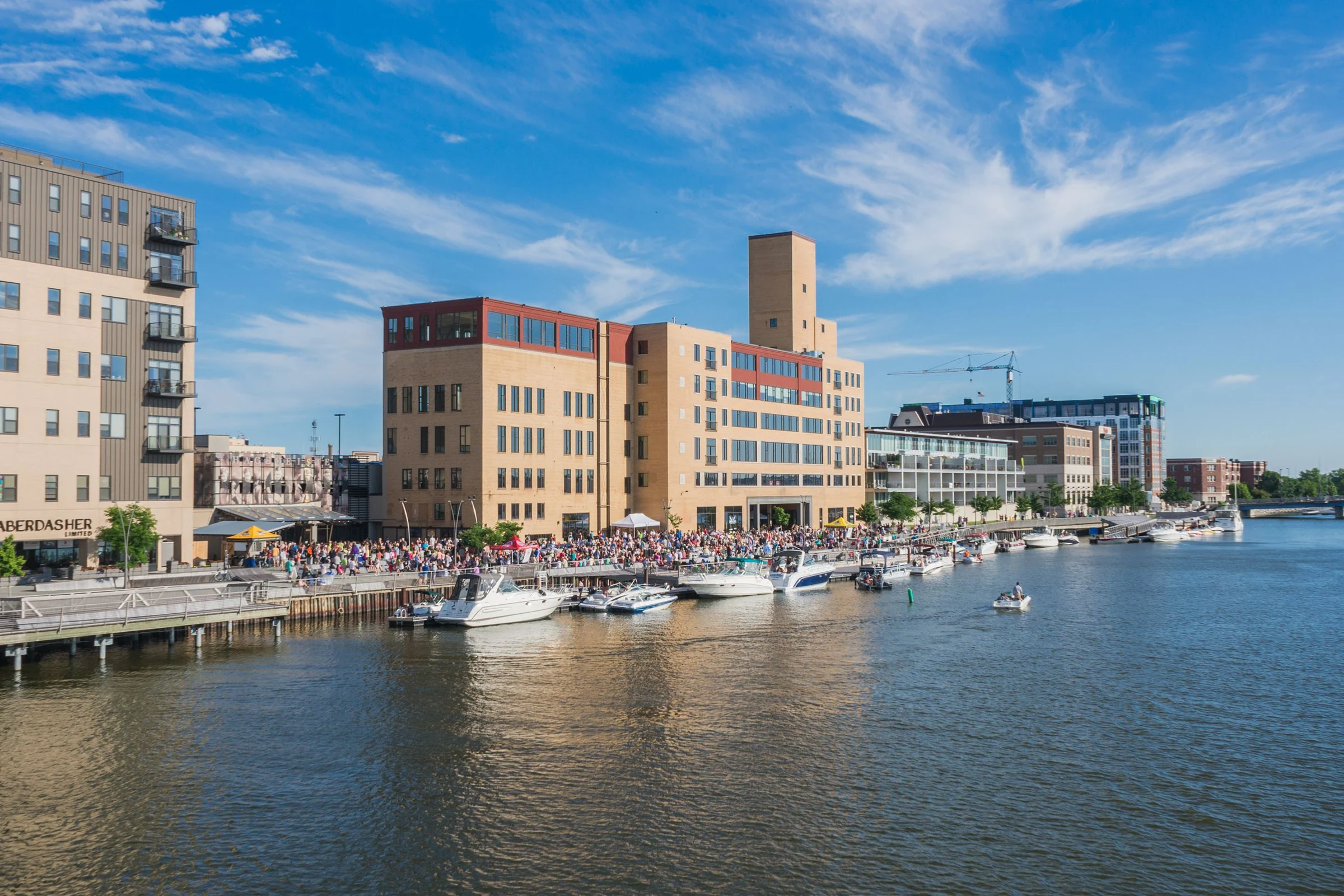
Commercial Roofers in Allouez
Commercial roofing in Allouez should begin with a documented assessment of membrane condition, seams, flashings, drainage, penetrations, and moisture before repair, coating, or replacement is selected. Allouez runs along the east bank of the Fox River just south of downtown Green Bay, and its commercial building stock reflects that position: professional offices, small medical and dental suites, institutional campuses, and a scatter of retail strips rather than big-box anchors. Most of the roof square footage we bid here is low-slope, and most of it was built for a 20-year service life that's already been stretched past that mark.
A Village Built on Offices, Not Retail Boxes
Webster Avenue and the side streets feeding it carry the bulk of Allouez's commercial square footage; single-story office buildings, insurance agencies, law practices, dental and optometry suites, a few small retail strips. These are almost all flat or low-slope roofs, most originally built-up asphalt or older EPDM that's been patched more than once by the time we get the call.
Building footprints here run smaller than what we see on the industrial side of Green Bay, which changes the math. A 4,000 to 8,000 square foot office roof doesn't carry the same per-square-foot mobilization discount as a 100,000 square foot warehouse, so we price small commercial jobs on their own terms instead of trying to force a big-roof number onto a small building.
Institutional Roofs Run on a Different Spec
Allouez is also home to state institutional buildings with roof areas well beyond what a typical office strip carries, and those jobs come with security clearance, scheduled access windows, and phased sequencing that a private office roof never requires. We build the mobilization and inspection timeline around those constraints rather than pricing the work as if it were a standard commercial lot.
Municipal and institutional roofs also tend to run longer maintenance intervals with bigger capital gaps between them, which means when we do get called out, the membrane is often past the point where a simple patch fixes anything. We tell owners that plainly rather than selling a patch job on a roof that needs a section-by-section recover.
- Recover and re-cover estimates for aging built-up and EPDM office roofs
- Phased tear-off and TPO replacement on institutional buildings with security access windows
- Leak diagnosis on flat roofs with multiple prior patch repairs
- Edge metal and parapet flashing repair on Webster Avenue office strips
- Preventive maintenance contracts sized for small commercial square footage
- Emergency tarp and dry-in for active leaks over occupied office space
Fox River Humidity and Ponding on Flat Roofs
The Fox River corridor runs slightly more humid than the drier ground west of downtown, and on a dead-flat built-up roof that extra moisture load shows up as slower drying after rain and more consistent ponding in low spots near roof drains. Ponding that sits for more than 48 hours accelerates membrane breakdown regardless of what system is up there, and it's usually the first thing we flag on an Allouez inspection.
Winter brings the same freeze-thaw cycling every roof in the Green Bay area deals with, but on a flat built-up roof with existing ponding issues, ice forming in standing water adds a mechanical stress the membrane wasn't built to absorb. We look at drain placement and slope correction as part of any recover scope here, not as an optional add-on.
Recover vs. Tear-Off: Running the Numbers
Most Allouez office roofs are candidates for a recover system if the existing deck is dry and the insulation hasn't degraded, and that route typically runs meaningfully cheaper per square foot than a full tear-off because it skips deck disposal and re-insulation. We walk owners through both numbers; recover cost against a 15 to 20 year expected life, versus tear-off cost against a 20 to 25 year expected life; so the decision is a budget call, not a guess.
On buildings where a prior patch job already added a second membrane layer, recover often isn't an option under code, and we say so up front rather than quoting a recover price we can't actually deliver. That's usually the single biggest surprise on an Allouez estimate, and we'd rather surface it before the bid than after the tear-off starts.
Working Around Occupied Offices
An occupied office building means noise and access constraints during business hours, and we sequence tear-off and hot work around tenant schedules where the building allows it. Institutional sites add a separate layer of coordination for security clearance and equipment staging, which we build into the estimate as a line item instead of an afterthought that shows up as a change order mid-job.
Allouez Roofing Questions
Can you recover an office roof without disrupting the tenants inside?
In most cases yes, since recover work happens entirely on the roof deck and doesn't require interior access. We schedule the noisiest phases, like fastening and hot-air welding, around the building's occupied hours when possible.
How do you handle jobs on institutional or state-operated buildings?
We build the security clearance process and any access-window restrictions into the project timeline before we bid, so the schedule reflects the real constraints of the site rather than a standard commercial timeline.
Is ponding water always a sign the roof needs replacement?
Not always. Sometimes it's a drain or slope issue we can correct without a full tear-off. We check that before recommending replacement over repair.
What's the real cost difference between recover and full tear-off?
Recover is typically cheaper per square foot up front but carries a shorter expected service life than a full tear-off with new insulation. We give owners both numbers against their building's actual condition so they can weigh the tradeoff themselves.
Do you work on small office roofs, or only larger commercial buildings?
Most of what we do in Allouez is smaller footprint work. We price those jobs on their own terms instead of applying large-building assumptions to a building that doesn't fit them.