Service Areas
Commercial Roofing Contractors Downtown Green Bay, WI
Commercial Roofers in Downtown Green Bay, WA
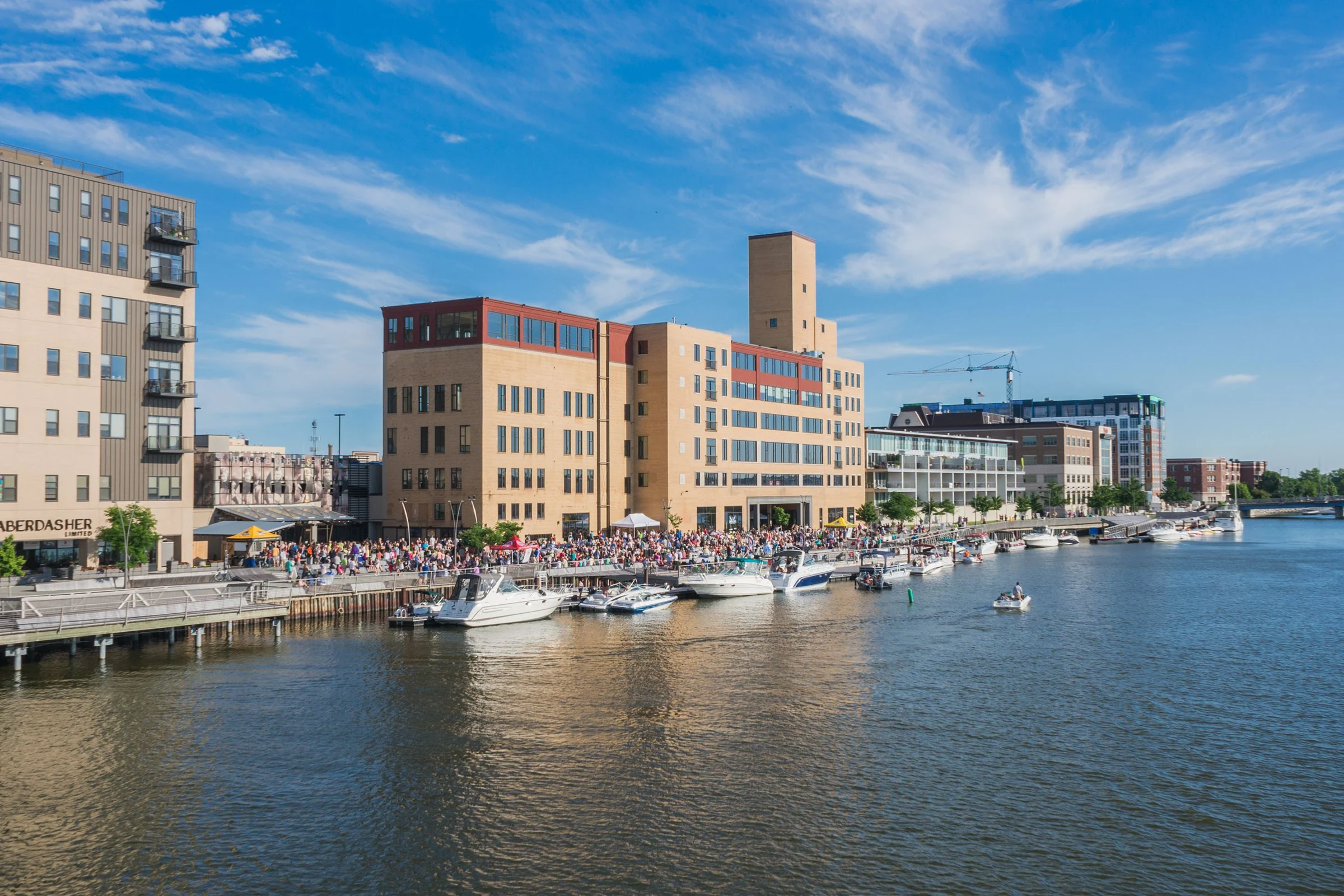
A practical commercial roofing plan for Downtown Green Bay, WA properties separates urgent leak control from repair, coating, maintenance, and replacement decisions supported by photos and condition findings. Downtown Green Bay is a different roofing environment than the suburban corridors surrounding it; office towers and bank buildings along Washington Street and Monroe Avenue, hotels and the convention center anchored to the Fox River, and a historic core where some buildings date back more than a century. Access is tighter, staging is harder, and a fair number of these roofs sit on top of occupied office and hotel space where downtime has a real cost measured by the floor.
Office and Bank Building Roofs Above Occupied Space
The taller office and financial buildings downtown carry roofs that are smaller in footprint than a suburban warehouse but higher-stakes per square foot, since a leak two floors down from the roof deck in an occupied office building means damaged ceiling tile, wiring, and potentially server or records space that a tenant can't afford to lose. We plan tear-off and recover work on these buildings around business hours and building management's tenant notification requirements, rather than around weather windows alone the way we might on a standalone suburban building.
Rooftop mechanical equipment on downtown office buildings also tends to be denser and older in places, given how many of these structures have been retrofitted repeatedly over decades of tenant changes. Flashing detail around aging curbs and equipment pads is where we find most of the active leak sources on an office building inspection here, more often than field membrane failure itself.
Scheduling is the other variable that differs from suburban work. Building management downtown often wants roof access limited to early morning or weekend windows to avoid disrupting an elevator schedule already busy with tenant foot traffic, and we sequence crew and material staging around those windows rather than assuming a standard eight-to-five workday like we would on a freestanding suburban building.
Hotels and the Riverfront Convention District
The hotel and convention property clustered near the Fox River and the CityDeck runs on a different downtime calculus than a suburban limited-service hotel; convention bookings, weddings, and event traffic mean occupancy planning is often locked in a year or more ahead, and a roofing schedule has to work around that calendar rather than the other way around. We coordinate directly with property management on timing for any downtown hotel roof project so the work doesn't collide with a booked event weekend.
Historic Buildings Along Washington Street
Some of downtown's older buildings predate modern flat-roof membrane systems entirely, meaning what's up there today is likely at least a second or third roofing generation over an original structure never designed for a low-slope membrane roof in the first place. Parapet condition, masonry interface, and structural deck capacity all need evaluation before we recommend a system on a historic building, since the roofing assembly has to work with what the building can actually support rather than a standard spec sheet answer.
- Office and bank building roof recover scheduled around occupied tenant space
- Hotel and convention property roofing coordinated with event booking calendars
- Historic Washington Street building roof assessment and parapet repair
- Riverfront building roof drainage and scupper maintenance
- Rooftop mechanical curb and flashing repair for retrofitted office buildings
- Emergency leak response for occupied downtown commercial space
Given how much liability sits below a downtown roof compared to a suburban warehouse, a thorough roof inspection that documents both membrane and structural condition is usually the first step we recommend before any downtown scope gets written.
Access, Staging, and River-Adjacent Weather
Tight streets, limited loading zones, and parking structures instead of open lots all change how a downtown job gets staged compared to a suburban site with its own parking field to work from. Crane placement and material hoisting have to be coordinated with the city for street closures or lane restrictions on some jobs, and we build that permitting and coordination time into the project schedule rather than treating it as an afterthought once the crew shows up.
The Fox River running through downtown also means river-adjacent buildings see the same damper microclimate and extended freeze-thaw window found elsewhere along the water, on top of wind funneling effects between taller buildings that can concentrate snow drift against parapets in patterns a standalone suburban building wouldn't see.
Insurance and property management requirements downtown also tend to be more formal than a small suburban owner-occupied building, with proof of coverage, safety plans, and sometimes a pre-work walkthrough required before a crew is cleared onto the roof. We handle that documentation as a standard part of quoting downtown work rather than treating it as an unusual add-on step.
Downtown Green Bay Roofing Questions
Can roof work happen on an occupied office building without disrupting tenants?
Generally yes, with the right scheduling. We coordinate with building management on timing, noise windows, and tenant notification before work starts.
Do historic downtown buildings need a different roofing approach?
Often, yes. Structural deck capacity and parapet or masonry condition have to be evaluated first, since the roofing system needs to match what the building can actually support.
How do you handle roof projects near the convention center or riverfront hotels?
We coordinate timing directly with property management around their event and booking calendar so the work doesn't conflict with occupied event space.
Is staging harder downtown than in the suburbs?
Yes. Limited street access and parking mean crane and material logistics need more upfront planning, sometimes including city coordination for street or lane use.
What's the most common source of leaks on downtown office roofs?
Flashing around aging rooftop mechanical curbs and equipment pads, more often than we find actual field membrane failure.